The origin of action
"Action may not bring happiness but there is no happiness without action." ~ William James
Just because it was said doesn't make it so. Especially if it was said back in the 1800's! When we allow words to direct our decisions, are we taking the easy path by following someone else's advice or actually setting ourselves up for failure? The problem is not the advice, but rather when that advice is applied.
Sometimes, inaction is better. Not taking action is an act in patience and discipline. Some of the most stoic people I know are rocks when the less timid act (or react).
Let's look at some examples:
- An opportunity shows up in my inbox. I'm predisposed to act and respond without considering the ramifications of saying yes to the opportunity. Saying yes negavitely impacts what I'm already workign on (and committed to). Saying no (or simply not responding) might be in the best interest of a conflicting priority.
- I'm looking up something online, and before I know I'm watching a tutorial and derailed from the task at hand.
- I wake up at 3am. I begin to ruminate over what I need to do. I get up. 12 hours later, I'm toast. The additional work often creates additional work! I feel like hamster on a wheel of never ending todos. I get up because I feel that I need mark of some incompletions.
"The objective of education isn't knowledge; it's action" ~ Thomas Kempis
Press Start
Thinking of walking into a room is not the same as actually walking into a room. We hesitate because action leads to gain or loss. What spawns us to take action? If we fear taking action leads to loss, we won't do it. If we fear lack of action leads to loss, we're more likely to do it. Take an example of a lifelong smoker. Until death is apparent and their doctor gives them the dreaded "Stop now or you will die soon," they'll keep on smoking. Smokers might avoid going to the doctor altogether to avoid the ultimatum altogether. What's the payout of staying alive? Is what you are living for stronger than the desire to smoke? The consensus among many life mastery experts is that inertia is the secret to taking action. No matter how small, just start. What's scheduled is what gets done. If you work for yourself or run a business, you'll need to generate income. Passive income is great, but the effort to start the passive income drip can be massive. At the end of the day, every action is a risk. What really drives you? I know that staying self employed requires I keep enough money in my bank account to pay all my bills. Once I reach a low water mark (less than 3 months buffer), I start to feel the pressure to act. But here's the kicker. When my bank account is high, I'm less driven to act in the way I do when my bank account is low. It's revealed in my ability to earn an income. As long as there is money in the bank account to cover the bills, there isn't a fear of financial hardship. It's not until then 'low water mark' is reached that I am driven to act and drum up business. It's time to move the low water mark up.
Consequences and priorities
Which books do I read? The ones that are due back to the library. There is a deadline and their are consequences for missing that deadline (a late fee). Deadlines without consequences will never take priority over those with consequences. The more painful the consequence, the more likely they are to spawn action. Had I known that by NOT replacing my hard drive, I was increasing the chances of a catastrophic failure, I'd surely have taken action before it was too late. Had I known someone else was working on my idea, I surely would have made it a higher priority.
Disruptive Action
The ability to take committed and effective action in the presence of disruptive thoughts that would stop us from taking action. If our choices favor the short-term, yet negatively impacts the long-term, we are not thinking like an investor. Investors consider the long-term ramifications of a decision. I developed the 2x4 question. How will this decision impact me in 2 days, 2 weeks, 2 months, and 2 years from now? When needed, use a 2x6. Add 2 minutes and 2 hours from now. Or go real long and use a 2x8, add 2 decades (20 years) and 2 centuries. Investors place higher weight on the future value of decision. How our lives unfold is a direct result of cause and effect. Your mere existence was the result of an act of love on behalf of your parents.
The only thing that limits who we become are the actions we take. Since every action has a reaction, the results we get are defined by our ability to start. Every action has a start. Focus on the steps not the destination. Do what you can in that moment. Just start. In a world flooded with more data than ever before, too often we get caught up in paralysis by analysis.
I was inspired by Danica Patrick. She is living proof of the 3 phases of inertia in action:
- Phase 1: It will be uncomfortable
- Phase 2: It may feel unbearable
- Phase 3: We become unstoppable
Be
It's who we are being, defined by our actions, that define who we become. Decide to act. Who we become is who we are being. It begins when we take that step into our future by being in the present and not in thoughts of the past, future, or end result. We must overcome who we've be en to evolve.
Indecision
The mistake we make is believing we have control over our decisions. When in fact, it's not our decisions but the conditioning of our preconscious that allow us to impact our decisions.
Just start
Any action begins with a first step. Progress will occur differently for everyone. An accomplished guitarist who has been playing for 30 years will have a much shorter path to learning a piece than someone with less experience. You gain experience by taking action. The more experience you gain, the shorter the distance. All that matters is that you take action. Inertia can't begin until you start moving. Sidebar: Momentum The act of living began in a moment of decision. The only decision you have to make is to start now.
Throw your hat over the fence
It's an analogy for putting yourself out there. When you throw your hat over the fence, and you want it back, you have to climb over the fence to get it. The steps you take to retrieve is what must be done to accomplish the goal. There are many ways to climb the fence, and some are faster then others. The more times you climb over that fence, the easier it becomes. But be careful, when you throw too many hats over the fence, you may have a hard time deciding which one to pick up (or forget completely).
Plan
- Your day ahead.
- What quotes are due?
- What projects are green lit?
- Are the next best actions of the 'live jobs' assigned in time and to a resource?
It begins with the next hour. Each hour ends, and that end is a mini deadline. You have deadlines through the day, but what precludes a deadline? A decision. A decision on what you will do with the next hour. What can you do with what you have right now? What are the obstacles? Are you clearing away obstacles for good or just moving them to the back of the stack? According to newtons law, every action has an equal and opposite reaction. Thus, all action is a reaction from a point of origin. Your parents created the big bang of your life which began the chain reaction. Your birth was literally a reaction of their action to conceive you. That point of conceiving was a reaction to them falling in love ). Therefore, love is the source of all action. Or was your birth the result of just an animal instinct to procreate? Are we not just pieces in the great puzzle of evolution? Assuming we are just links in the chain, rivets if you will, what is the point? The point is to connect the chain. Our purpose is thus one to maintain the connection to the other links in the chain of life. We are connected to those we love. Whenever you are unsure of who you are or what you are here for, concur the image of a chain. Zoom into the rivet in the link. See yourself as that rivet. We are after all, links in the chain of evolution. As you plan your actions for today, see each action as a rivet that connects the chain of the day from the moment you awake to the moment you fall asleep. Your impact will be the result of your actions. And you actions stem from what you ask of yourself and others. Be unreasonable.
Reason breeds mediocracy. When do the reactions cease? The cease when we are stopped. When we hit obstacles we are unwilling to overcome. It's not that we are unwilling to overcome the obstacle, it's that we are unwilling to take the necessary actions necessary to overcome the hurdle. Evolution is a noun.
Evolve is verb. Evolution is a description. Evolve is an action. Common definitions of evolution:- the process by which different kinds of living organisms are thought to have developed and diversified from earlier forms during the history of the earth.
- the gradual development of something, especially from a simple to a more complex form.
- a pattern of movements or maneuvers.
- the extraction of a root from a given quantity.
Therefore, your task today is to simply evolve.
Your life is a chain of evolution from birth to death.
Your day is a chain of evolution from right now till you fall asleep.
It's when you see that right now evolved from a moment ago that evidence of momentum exists.
Is any action we take truly unrelated to all other actions?
It's a continual chain from our birth tim our death.
This precludes that your mind (your neurology) is a 'reactor.'
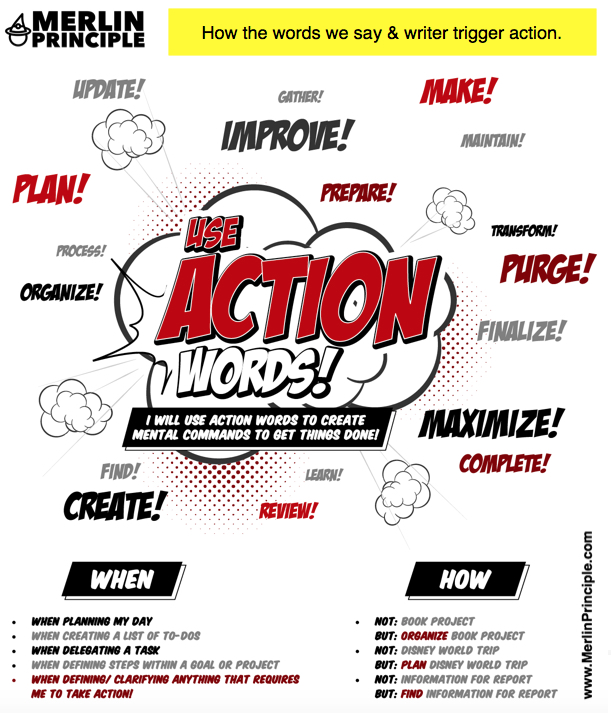
Use Action Words
## The evolution of wealth What if you dived into wealth creation as deeply as you did the creation of consciousness? Serious, you wake up every morning and write, study, and reflect on spirituality. You have been a seeker of 'the truth' for the past several years. You have a curiosity of what happens beyond and what happened before. Can you expand this curiosity to the concept of wealth? ## Further Reading